


Join 
Want to be the first to hear about London music events, projects and opportunities? Sign up to our network for free.

Menu

Music publishing can be very complicated to wrap your head around, especially as an emerging artist. While it can seem like a hard nut to crack, music publishing can be one of the most lucrative revenue streams for artists. That’s why we had artist liaison Marlon Perrin from Sentric Music join us for a live webinar to talk us through everything music publishing, and different ways artists can claim publishing royalties.
What is music publishing
Music publishing is the creation of copyrights and IP (intellectual property) of your songs, not your recordings.
Music publishers work on behalf of song writers and composers to:
How does a publisher work?
A publisher will enter an agreement with you where:
Publishers can take from 5-25% of royalties depending on the contract and service.

When should you get a publisher:
What is a PRO Performing Right Organisation?
A PRO is responsible for collecting performing royalties on behalf of composers and songwriters in each territory.
Unlike music publishers, PROs license and collect royalties for millions of songs, which protects the value of music. PROs group copyrights together to negotiate and licence to digital services, broadcasters, and live venues.
It’s also important to note that PROs don’t collect mechanical royalties.
UK-based PROs
PRS for Music collects and distributes royalties on behalf of songwriters, composers, and music publishers, for the use of their musical compositions and lyrics.
Royalties come from wherever your work has been exploited including sales, streaming, downloads, and adverts.
PPL (Phonograthite performance limited) collects and distributes royalties on behalf of performers and record companies for the use of their recorded music.
PPL licenses radio stations, TV broadcasters and certain digital media services to play recorded music in the UK. The music licensing royalties collected are then distributed to the performers and recording rightsholders PPL represents, based on the use of their music.
Different types of royalties – Mechanical and Performance
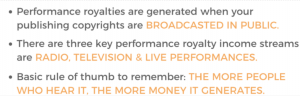
Performance rights are anything collected through the likes of PRS or the performance of the song.
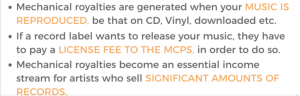
Mechanical rights are song writing and rights of the song.
Both mechanical and performance royalties are generated when your music is streamed, so it’s important to keep on top of your digital publishing income especially if you have steady streaming numbers.
Don’t miss out on that mula!
Synchronisation
Sync is the placement of your song in a TV show, movie, video game, apps or ad campaign. Bear in mind, tracks can only get synced once the master and publishing copyrights are cleared.
If you get a successful sync placement, the majority of revenue will come through backend royalties, which are paid out by PROs.
FUN FACT: When registering your music to be synced, if you own your masters and publishing, you become known as a One Stop, which is attractive to music supervisors and sync agents as there is no middle man.
Conclusion
Now that you have an idea about music publishing, why not delve in deeper and listen to our webinar with Marlon Perrin.
Want to sign up to Sentric Music?
Sentric music is a British independent music publisher that specialises in emerging songwriters and artists helping them to retain the copyrights to their songs.
Sentric Music is all about putting the power back in artists hands by ensuring that artists can access a global publishing deal without ever having to give up the ownership of their copyrights.
On top of that, they also help artists get their music registered so that it’s ready to get synced on TV, Radio and other platforms.
Does your organisation work with people age 16-25? Sign up to our monthly newsletter and share all the latest music opps and news with your team.
Find some of the most exciting music events, courses, jobs and opportunities for people age 16-25 in London.
Want to be the first to hear about London music events, projects and opportunities? Sign up to our network for free.


 Close
Close